
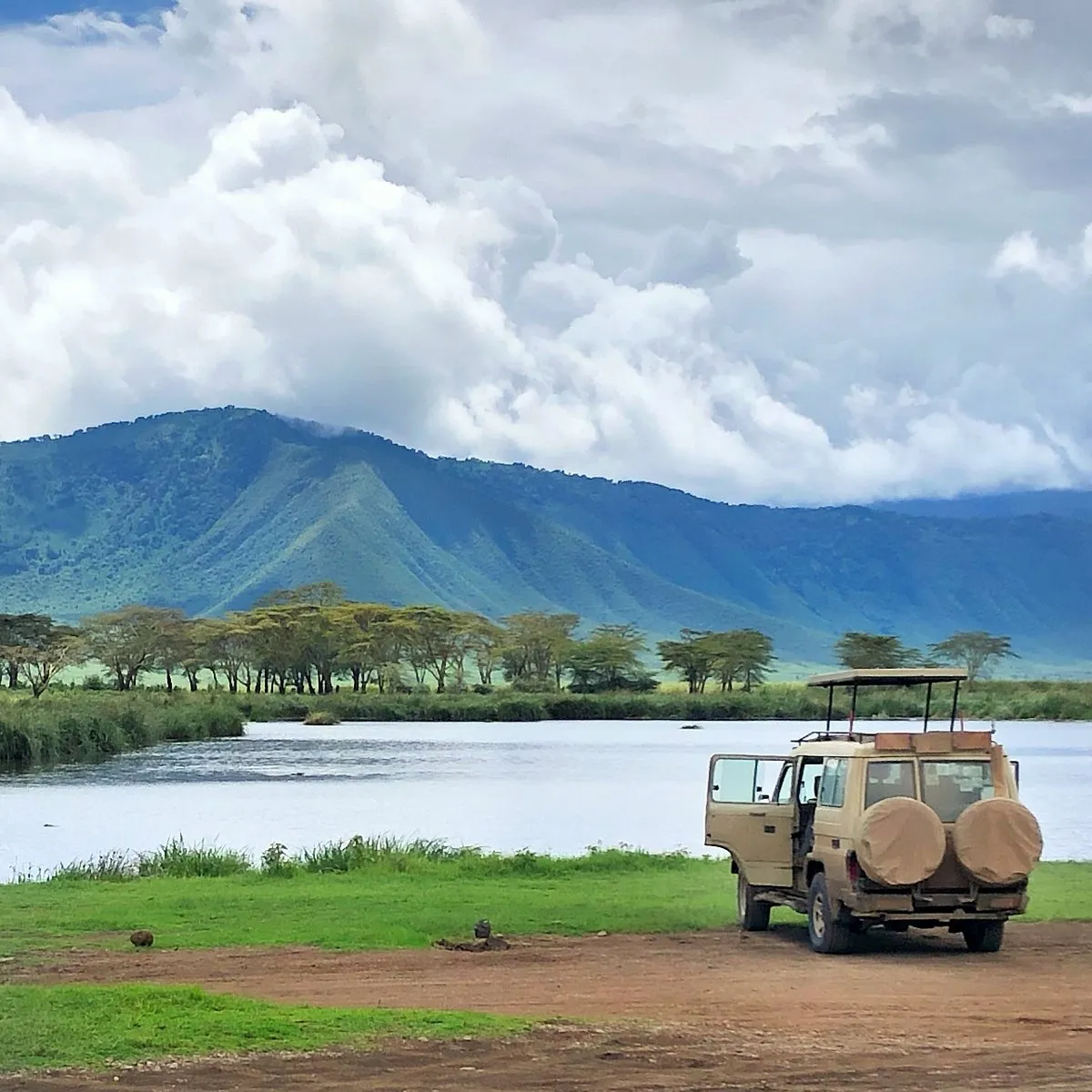
A single day in Ngorongoro Crater can deliver lions, elephants, hippos, and flamingos before lunch, but no visit guarantees every animal. This guide describes the descent, what you are likely to see, what you may miss, and how to make the most of one day. Crater day options are on this park guide.
How the Descent into the Crater Works
The descent begins at the crater rim, roughly 2,200 meters above sea level, where vehicles join a steep, winding road down to the floor. Only four-wheel-drive safari vehicles are permitted, and the drive takes about thirty minutes. Most groups leave camp around dawn to reach the floor while animals remain active and the light is soft. Visitors are allowed to stay a maximum of six hours inside, so efficient planning matters. Cool mist often clings to the rim early; therefore, a warm layer is surprisingly useful before temperatures rise.
The Big Animals You Are Likely to See
The crater floor supports roughly 25,000 large animals, so sightings are frequent and often close. Wildebeest, zebra, and Thomson’s gazelle graze across open grassland, while lions rest near them, waiting for the right moment. Large bull elephants wander the Lerai Forest, and hippos wallow in the Ngoitokitok Springs area. Spotted hyenas are common, and golden jackals dart around the plains. Because the animals live here year-round, a one-day visit rarely feels empty. Most travelers return with a full memory card and several memorable predator encounters from the day.
What You Might Realistically Miss
Honesty helps here: leopards are rare on the crater floor, and cheetahs appear only occasionally. Black rhinos are present, yet only a few dozen live inside, and they usually stay far from roads, so binoculars become essential. Giraffes are absent because the steep walls discourage them from entering. Even lions may sleep in the shade for hours, offering little action. Dust, clouds, or crowded viewing spots can also reduce enjoyment. Treat any rhino or leopard sighting as a bonus rather than a promise, and your day will feel richer.
Best Time of Day and Season for Game Viewing
Early morning offers the best chance of seeing predators active, since cooler air keeps lions and hyenas moving. By midday, many animals rest, though hippos and birdlife remain entertaining. The dry season from June to October gives clearer roads and concentrated wildlife near water. The green season, from November to May, brings lush scenery, newborn calves, and fewer vehicles, although some tracks become muddy. Neither period is wrong, so choose according to your priorities. Arriving at the gate before six o’clock usually helps you beat the largest convoys.
Planning a Day Trip from Arusha or Karatu
Most travelers base themselves in Karatu, about forty-five minutes from the rim, or in Arusha, a longer drive of roughly three hours. Staying in Karatu makes the early start far easier. Your driver-guide will arrange park fees, vehicle permits, and a packed lunch, usually eaten at a hippo pool picnic site. Bring sunscreen, a hat, layered clothing, and a charged camera. Because rules and fees change, confirm the current costs before booking. A knowledgeable guide also spots camouflaged animals quickly, which can transform an ordinary game drive into a genuinely rewarding one.
Fitting the Crater Into a Combined Kenya Tanzania Safari
The crater works beautifully as one highlight within a combined Kenya Tanzania safari, pairing well with the Maasai Mara and Serengeti. Many itineraries begin in Nairobi, cross at Namanga to Arusha, then continue to Tarangire, Serengeti, and Ngorongoro before returning. This sequence allows travelers to compare open savannah with the enclosed caldera. Because the crater is compact, one day is enough, freeing time for other parks. Allow at least eight to ten days overall, and remember that border procedures and transfers need careful scheduling to protect your game-viewing hours.
Making One Day Count
One day in the crater can be memorable if you arrive early and keep expectations realistic. Treat rhinos and leopards as a bonus, and enjoy the wildlife that is almost always there.
